
Quick Answer
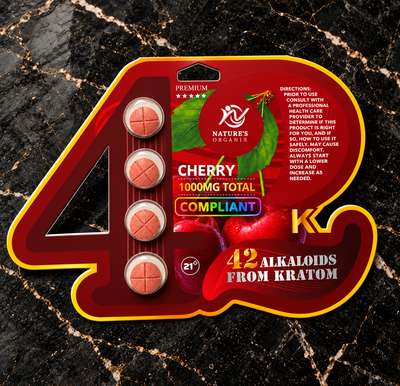
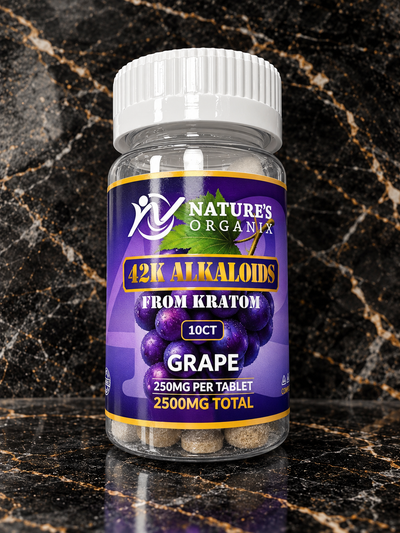
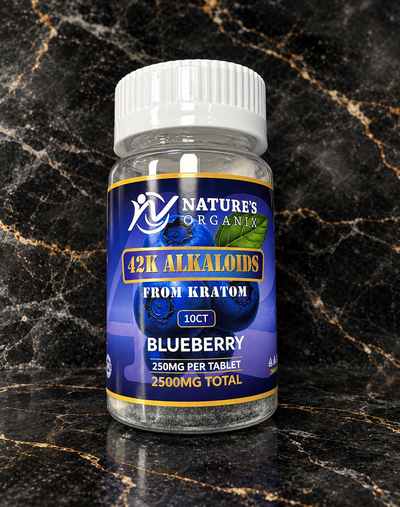
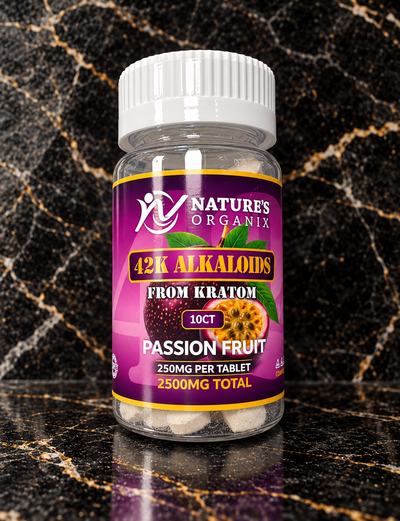
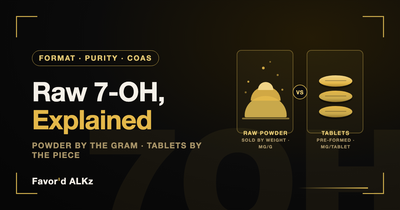
Powder is sold by weight. Tablets are sold by alkaloid content. The only number that makes mitragynine tablets comparable across flavors, formats, and brands is lab-measured milligrams of mitragynine per tablet. Our current line runs from 128.5mg (grape) to 195.7mg (blueberry) per tablet, quantified by an ISO/IEC 17025-accredited laboratory, alongside a 75mg liposomal capsule. "Liposomal" describes how the capsule is formulated — a phospholipid vesicle carrying the alkaloid material — not a promise about what it does.
If you're shopping for mitragynine tablets, you'll see a confusing mix of numbers: tablet weight in grams, "leaf equivalent," serving counts, and — on the labels that actually matter — milligrams of mitragynine per tablet. Only one of those numbers lets you compare products. This guide explains which one, where it comes from, and what the word "liposomal" means when it shows up on a kratom capsule.
Why mg of Mitragynine Is the Only Number That Travels
A bag of kratom powder sold as "100 grams" tells you the weight of plant material, not the alkaloid content. Mitragynine — the dominant alkaloid in Mitragyna speciosa — typically makes up only a small percentage of dried leaf by weight, and that percentage moves from harvest to harvest and batch to batch. Two scoops of powder that weigh exactly the same can carry meaningfully different alkaloid loads, and without a batch lab report you have no way to know which is which.
A pressed tablet with a lab-verified mitragynine number flips that. The label isn't describing how much the tablet weighs; it's reporting how much mitragynine an independent laboratory measured in that batch, divided per tablet. That makes the number portable: a 156mg tablet from one brand and a 156mg tablet from another contain the same quantity of the same molecule, regardless of tablet size, flavor, or fillers.
It also changes how you should compare prices. The honest unit of comparison for any kratom product is cost per milligram of lab-measured mitragynine — not cost per tablet, per gram, or per bag. A cheap product with no published alkaloid number isn't cheap; it's unpriced.
Where the Number Comes From: ISO/IEC 17025 HPLC
The mitragynine figure on a credible label is produced by high-performance liquid chromatography (HPLC) at an independent, ISO/IEC 17025-accredited laboratory. The lab takes a sample from the finished batch, separates its alkaloids chromatographically, and quantifies each one against certified reference standards. The result is a Certificate of Analysis (COA) tied to that specific lot — if you've never read one, our consumer's guide to reading a kratom COA walks through every section.
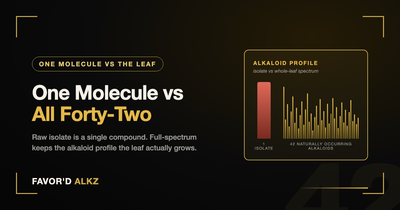
Kratom leaf is chemically busy — peer-reviewed work has identified at least 54 alkaloids in Mitragyna speciosa — so a single-analyte test only tells part of the story. Our panel quantifies nine analytes: mitragynine, 7-hydroxymitragynine, speciociliatine, paynantheine, speciogynine, corynantheidine, mitraphylline, mitragynine pseudoindoxyl, and MGM-15. The last three are routinely below detection limits in our products, and we publish that too — a "below limit of detection" line is data, not filler.
A concrete example of what full-panel reporting looks like: the current blueberry tablet COA measures 307.008mg of total alkaloids per tablet, within which naturally occurring 7-hydroxymitragynine is 1.721mg — roughly half a percent of the alkaloid fraction, the trace level the leaf itself produces. The headline mitragynine number sits inside that complete picture. Every certificate behind our products is lot-matched and available via our Lab Results page.
The Real Numbers: Our Current Line
These are the lab-measured mitragynine figures for the products we sell today, straight from the batch COAs:
Notice the per-tablet numbers differ by flavor. That's deliberate honesty, not inconsistency: each flavor run is pressed from its own tested batch, and the label follows the lab — never the other way around. We don't round every product to a marketing-friendly figure; we print what the chromatograph found. You can browse the full tablet line in one place in our tablets collection.
What "Liposomal" Actually Means (and What We Won't Claim)
"Liposomal mitragynine" is the newest phrase on kratom shelves, and almost nobody selling it defines it. Here is the definition, and nothing more.
A liposome is a microscopic spherical vesicle whose wall is built from phospholipids — the same class of two-tailed molecules that make up cell membranes. In water, phospholipids self-assemble: their water-attracting heads face outward and their fatty tails tuck inward, forming a closed bilayer sphere with an interior compartment. A liposomal formulation places another substance — in this case, full-spectrum kratom alkaloid material — within that phospholipid structure. The approach is documented in the patent literature; US patent application US20230364172A1, for example, describes phospholipid-based formulations of Mitragyna speciosa-derived compounds in which the lipids self-assemble into nanoscale spheres around the plant material.
So on a label, "liposomal" is a formulation term: it tells you how the capsule's contents are physically constructed, the way "enteric-coated" or "pressed tablet" describes construction. It is not a potency claim, and — we want to be plain about this — you will not find us making any claim about what a liposome does once it's in a human body. That category of claim belongs to clinical research, not product pages. What we can state, because a laboratory measured it, is what's inside: our Nature's Alks liposomal capsule carries 75mg of lab-measured mitragynine per capsule, quantified on the same ISO/IEC 17025 nine-analyte panel as every tablet we press, with its COA published on the Lab Results page.
Tablets vs Capsules: Same Logic, Different Shell
In label terms, the tablet-versus-capsule question is simpler than it looks. A pressed tablet is alkaloid material and binder compressed into a solid; a capsule is a shell enclosing a formulation — in the liposomal case, the phospholipid preparation described above. The format changes the construction, the flavor experience, and the per-unit number, but it doesn't change how you read the label: find the lab-measured milligrams of mitragynine per unit, confirm it against the batch COA, and compare products on that basis. A 128.5mg grape tablet and a 75mg liposomal capsule are different quantities in different constructions — the label literacy is identical.
Frequently Asked Questions
What does "mg per tablet" mean on a mitragynine tablet label?
It means milligrams of the alkaloid mitragynine measured in each tablet by a laboratory — not the tablet's total weight. A tablet that weighs over a gram may contain 128.5mg of mitragynine; the rest is plant material, binder, and flavor. The mitragynine figure is the only number that makes two products directly comparable.
How is mitragynine content actually measured?
By high-performance liquid chromatography (HPLC) at an independent ISO/IEC 17025-accredited laboratory, using certified reference standards. The lab tests a sample from each finished batch and issues a lot-matched Certificate of Analysis. Our panel quantifies nine alkaloid analytes per batch.
What is a liposomal kratom capsule?
A capsule whose contents are formulated with phospholipids that self-assemble into microscopic vesicles (liposomes) around the kratom alkaloid material. The term describes the formulation's physical construction, not its effects. Ours contains 75mg of lab-measured mitragynine per capsule.
Where can I see the lab reports?
The capsule COA is published on our Lab Results page, and every other lot-matched certificate is available by email on request. Match the lot number on the certificate to the lot number on your product before you rely on it.
Research & sources: the leaf chemistry and formulation facts in this article are drawn from peer-reviewed literature, the patent record, and our own ISO/IEC 17025 batch certificates.
- Flores-Bocanegra et al. (2020), J. Nat. Prod. — at least 54 alkaloids identified in kratom leaf
- US20230364172A1 (patents.google.com) — phospholipid-based formulation of Mitragyna speciosa-derived compounds; cited here as a formulation reference only
- Favor'd Alkz Lab Results — published capsule COA; all other lot-matched certificates by email on request
Shop The New Lineup
Full-spectrum, naturally derived kratom tablets and liposomal capsules — every alkaloid as the leaf made it, including naturally occurring 7-OH. Lab-tested ISO/IEC 17025; the capsule COA is published and all other certificates are available on request.
Kratom Tablets · Liposomal Capsules (75mg) · Lab Results
Keep Reading
For adults 21 and over only. These statements have not been evaluated by the Food and Drug Administration. These products are not intended to diagnose, treat, cure, or prevent any disease. Nothing in this article is dosing guidance or a claim about absorption, bioavailability, or effects; it describes label terminology and laboratory measurement only.