
Researchers who combed through 211 U.S. news stories about drug seizures found that just 3 of them — about 1 percent — so much as mentioned treatment or recovery resources. That ratio is the whole shape of the "legal high" story: a shipment intercepted, a spokesperson before a folding table of seized product, a reporter explaining that the substance is new, that it is potent, that it has slipped through a regulatory gap. The frame is almost always the same: a public-safety win against a dangerous thing. What is missing, nearly every time, is any serious account of the people on the other side of the transaction — who they are, and why they were buying.
That omission is not a hunch. It is measurable. And once you start looking at the peer-reviewed work on why people seek out novel substances, the standard "legal high" narrative begins to look less like journalism and more like a genre — one with predictable conventions, a reliable villain, and a conspicuously empty space where the consumer should be.
The genre and its blind spot
A 2025 content analysis published in Public Health in Practice, pointedly titled "Missed opportunities," examined 211 U.S. news articles about drug seizures published between January 2022 and May 2024. The finding is stark: only 3 of the 211 articles — about 1 percent — mentioned substance-use treatment or recovery resources at all, and just one offered genuinely actionable contact information. The overwhelming majority adopted a law-enforcement frame, presenting the seizure itself as the story's moral and its conclusion.
The authors do not mince words about the larger pattern. They write that "misinformation and fear-invoking language are hallmarks of drug policy coverage," and describe such reporting as lacking "perspectives of those with lived experience with substance use." Read those phrases together and you have a fair description of the genre's defining trait: it is fluent in what was seized or banned, and nearly mute on why anyone wanted it.
This is not a complaint about tone. It is a gap in information. A reader can finish a dozen of these articles and know a great deal about interdiction logistics and nothing about demand. And demand, it turns out, is where the interesting — and far less sensational — story lives.
What the research says people are actually doing
The first thing the literature dismantles is the idea of a single, uniform "dangerous trend." A Belgian qualitative study (Simonis and colleagues, Harm Reduction Journal, 2020), built on 45 in-depth interviews, found a wide diversity of motivations for using novel psychoactive substances, or NPS. The researchers distinguished internal motivations — pleasure, curiosity, social connection, energy or performance, and what they termed mind exploration — from external ones, such as more convenient online purchasing and the pursuit of a specific, stronger effect. They also noted a distinct, negative internal motive: problematic use as a form of coping.
None of that maps neatly onto a headline. Curiosity and a social occasion are not a crisis; they are ordinary human motives. The point here is not to romanticize any of these behaviors — many carry real risk — but to notice that flattening this heterogeneity into "a dangerous new trend" discards most of the actual explanation.
The same study punctures a second media reflex: the naive, reckless consumer who has no idea what they are putting in their body. In the Belgian sample, a majority of users "seem to be quite aware" of the identity of the substances they used — laboratory analysis confirmed correct identification in 63 percent of submitted samples — even as their knowledge of those substances' legal status was thin. That is a more complicated portrait than the stereotype allows. It is emphatically not a claim that awareness makes anything safe; it is a correction to a caricature.
Cost, access, and the limits of the autonomy story
If there is a structural through-line in the research, it is economics. Both the Belgian study and a parallel study of NPS use across Eurasia (Kurcevič and Lines, Harm Reduction Journal, 2020) identify price and accessibility as major demand drivers. The Eurasia work reported that in some markets, traditional substances such as heroin, opium, hashish, and cannabis cost roughly five to ten times more than NPS. Demand, in other words, responds to market structure and regulation — not merely to whatever novelty the media happens to be amplifying that month.
Here the honest essayist has to slow down, because the temptation is to spin all of this into a tidy story about consumer autonomy and free choice. The Eurasia study refuses to cooperate with that story, and that refusal is worth taking seriously.
Across 124 people who use drugs and 55 service providers in six countries, the researchers found that NPS often functioned as a substitute — something people turned to when their preferred drug was unavailable or unaffordable. Respondents said they would prefer traditional substances when available, and the authors found no evidence that users preferred NPS or sought them as safer alternatives.
That finding is a useful corrective in both directions. It cuts against the media's "dangerous trend" framing, because it suggests much demand is driven by scarcity and substitution rather than by some seductive new product. But it equally cuts against any glib "people are just exercising informed personal choice" narrative. Sometimes the choice is constrained, reactive, and not really a preference at all. A consumer-behavior lens has to hold both of those truths at once.
Why official warnings land softly
There is a further reason sensational coverage fails to do what it imagines it is doing — scare people into compliance. It assumes an audience that trusts the institutions doing the warning. That assumption is increasingly shaky.
Pew Research Center reported in November 2023 that the share of Americans expressing at least "a fair amount" of confidence in scientists to act in the public's best interests had fallen 14 points since the early pandemic, from 87 percent in April 2020 to 73 percent in 2023. The narrower "a great deal" of confidence dropped further, from 39 percent to 23 percent, while the share with little or no confidence rose from 12 percent to 27 percent. Among Republicans, the share expressing not-too-much or no confidence climbed from 14 percent in April 2020 to 38 percent. And the erosion is not limited to science: a 2019 Pew report found that about three-quarters of Americans believed their fellow citizens' trust in the federal government was shrinking, and 64 percent said low trust in government makes the country's problems harder to solve.
None of this means the institutions are wrong. It is critical to be clear about that. The point is purely behavioral: a warning is only as effective as the audience's willingness to credit the messenger. When official messaging is delivered into a low-trust environment, it gets discounted — and the genre that relies almost entirely on official voices is, in effect, shouting into a room that has stopped listening.
Where people listen instead
If audiences are tuning out institutions, they are tuning in somewhere. A Pew survey of 5,111 U.S. adults published in April 2026 found that 66 percent of Americans at least sometimes get health information from people facing similar health issues, and 36 percent from social media. At the same time, half reported difficulty judging whether health information is accurate, and 76 percent encountered conflicting information at least sometimes. Notably, healthcare providers remained the most trusted source — 65 percent of those who get information from providers rated it extremely or very accurate — while social media ranked lowest, with 47 percent of those who use it for health information calling that information not too or not at all accurate.
The behavioral upshot is straightforward. Peer and community narratives have enormous reach precisely because they come from sources the audience already trusts. That is a media-criticism observation, not an endorsement of those narratives' accuracy — much of what circulates peer-to-peer is wrong, and people themselves report struggling to tell. But coverage that ignores this entire information ecosystem is fighting the last war.
Banning a compound rarely ends the want
Finally, there is the policy mechanic the news cycle almost never follows past the seizure. A 2019 PLOS ONE policy mapping of the EU (Neicun and colleagues) notes that NPS are "misleadingly known as 'legal highs,'" and that a coherent public-health strategy "seems to be still missing." The recurring real-world pattern is that scheduling one compound tends to push demand toward the next unscheduled analogue rather than eliminating the underlying want. Regulation reshapes demand; it does not, by itself, erase it.
Step back, and a global scale emerges that the single-seizure story can never convey. The World Health Organization estimates that roughly 64 million people worldwide live with drug use disorders, that fewer than 10 percent currently receive treatment, and that an estimated 316 million people used drugs in 2023. Whatever one thinks about any particular substance, this is a large, under-served public-health phenomenon — not a problem that resolves at the moment a press conference ends.
Why this matters to us, and how we try to act differently
We write about this as a company that sells a product the genre would happily reduce to a table of confiscated bottles: 7-hydroxymitragynine, or 7-OH. So it is worth being unflinching about what 7-OH actually is.
7-OH is a potent, concentrated compound that is derived from kratom but is chemically and pharmacologically distinct from the traditional leaf. The U.S. FDA, in 2025, issued warning letters to firms marketing 7-OH products and stated that 7-OH occurs naturally in kratom only in trace amounts. Its specific concern is with concentrated 7-OH products — tablets, gummies, drink mixes, and shots — which the agency has characterized as "novel potent opioid products" and has moved to restrict, including a recommended scheduling action. The FDA has also stated that such products have not been proven safe or effective for any use. The compound's safety profile remains under study, its legality varies by state and locality, and these products are intended only for adults 21 and older. We are not going to dress any of that up.
What the research above changes for us is not the chemistry; it is the journalism. The lesson of the consumer-behavior literature is that demand is driven by identifiable, often mundane factors — cost, access, curiosity, social context, distrust of official messaging, and supply-side substitution — and that treating every consumer as a faceless symptom of a "dangerous product" explains nothing. Better coverage would examine those drivers analytically rather than moralistically. Understanding demand neither excuses nor endorses any particular use; it is simply more honest than the genre it would replace.
The one business practice we will name, and only as a practice: Favor'd Alkz publishes third-party lab certificates of analysis (COAs) so that customers can see what is in a product. That is a statement about transparency, not about safety, efficacy, or any health outcome — and we would rather be measured by that kind of candor than by a folding table.
Research & sources: kratom leaf chemistry and 7-OH facts in this article are drawn from peer-reviewed literature and primary regulatory sources.
- FDA — 7-hydroxymitragynine — the federal view of natural vs concentrated 7-OH
- Takayama (2004), Chem. Pharm. Bull. — alkaloid profile of Mitragyna speciosa; 7-OH ≈2% of the alkaloid fraction
These statements have not been evaluated by the Food and Drug Administration. This article is for educational purposes only and is not medical advice; nothing here is intended to diagnose, treat, cure, or prevent any disease. Products discussed are intended for adults 21 and older. Laws governing kratom and 7-hydroxymitragynine vary by state and locality — check your local regulations before purchasing.
Sources
- Missed opportunities: Public health messaging in media coverage of drug seizures — Public Health in Practice, via PubMed Central, 2025
- Awareness of users and motivational factors for using new psychoactive substances in Belgium — Harm Reduction Journal (Simonis et al., 2020), via PubMed Central
- New psychoactive substances in Eurasia: a qualitative study of people who use drugs and harm reduction services in six countries — Harm Reduction Journal (Kurcevič & Lines, 2020), via PubMed Central
- Americans' Trust in Scientists, Positive Views of Science Continue to Decline — Pew Research Center, Nov 14, 2023
- Key findings about Americans' declining trust in government and each other — Pew Research Center, July 22, 2019
- Where Do Americans Get Health Information, and What Do They Trust? — Pew Research Center, April 7, 2026
- WHO updates guidelines on opioid dependence treatment and overdose prevention — World Health Organization, April 2, 2026
- Mapping novel psychoactive substances policy in the EU — PLOS ONE (Neicun et al., 2019)
- FDA Issues Warning Letters to Firms Marketing Products Containing 7-Hydroxymitragynine — U.S. Food and Drug Administration, 2025
- 7-OH Products Haven't Been Proven Safe or Effective for Any Use — U.S. Food and Drug Administration, Consumer Update
Shop The New Lineup
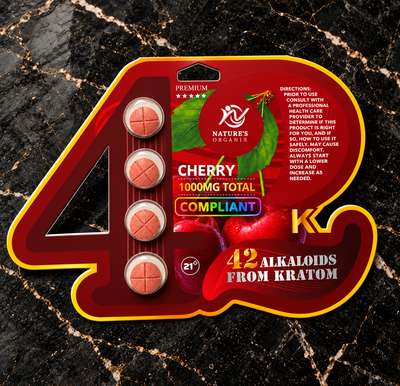
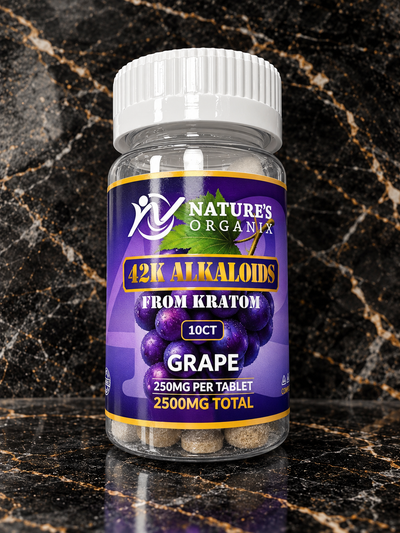
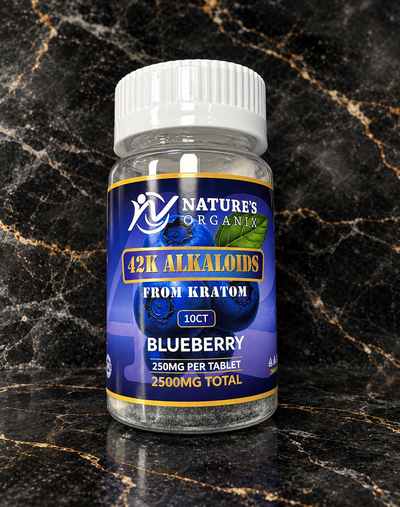
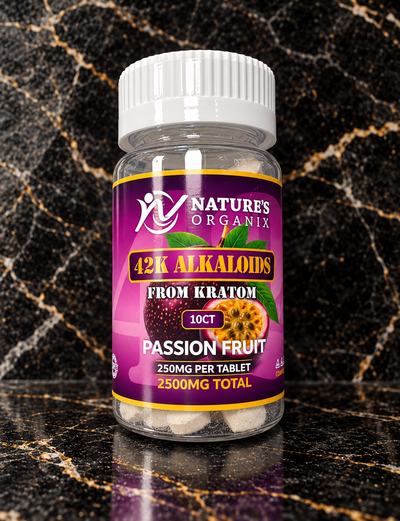
Full-spectrum, naturally derived kratom tablets and liposomal capsules — every alkaloid as the leaf made it, including naturally occurring 7-OH. Lab-tested ISO/IEC 17025; the capsule COA is published and all other certificates are available on request.
Kratom Tablets · 7-OH Ban Timeline · Lab Results
Keep Reading