
7-OH Alternatives, October 2026: The Only One That Outlasts the Ban
Quick answer — October 2026
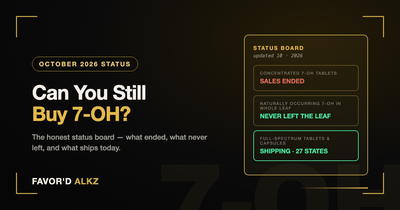
Most products marketed today as a "7-OH alternative" are next-generation synthetic derivatives — the same product category the DEA has already acted on once, under DEA-1644, which is in force with a zero threshold. Concentrated 7-OH sales ended industry-wide in September 2026, while the 7-OH docket itself (DEA-1570) remains proposed scheduling, final rule pending. The one lane the July 2026 federal action explicitly leaves outside its line is full-spectrum, naturally derived kratom leaf carrying only trace, naturally occurring 7-OH. That is the alternative built to outlast the cycle. 21+, where legal, and always subject to your state's law.
This page was fully refreshed in October 2026. The question it answers has changed since July: back then, "what stays legal" meant mapping the DEA threshold. Today, with concentrated 7-OH off the shelves, the search results for legal 7-OH alternative are filling up with something new — novel lab-made derivatives sold on the claim that they aren't technically 7-OH. We think the record shows exactly where that road leads, and it isn't anywhere you want your supply chain standing. Below: the three roads in front of anyone shopping this category, what full-spectrum actually means chemically, and how to vet any product calling itself an alternative.
Where the record stands, October 2026
Status update — September 4, 2026: The analogues named in DEA-1644 — mitragynine pseudoindoxyl, MGM-15 and MGM-16 — are no longer sold by Favor’d ALKz, and those products have been withdrawn from sale. DEA-1570 concerns 7-OH and is a separate docket. Timeline statements elsewhere on this page describe the position as at the date they were written and may not reflect the current record. For current state-by-state status see our Kratom Regulation Map. Informational only; not legal advice.
Three facts frame everything else. First, DEA-1570 — the docket covering 7-OH above a threshold (more than 1.00 mg per article, or more than 0.05% by dry weight) — is still proposed scheduling; the final rule is pending. Second, DEA-1644, which names the synthetic derivatives mitragynine pseudoindoxyl, MGM-15 and MGM-16, is in force with a zero threshold — not a milligram line, zero. Third, the federal action was drawn deliberately around concentration: botanical kratom leaf with only trace, naturally occurring 7-OH sits explicitly outside it. Concentrated 7-OH product sales ended industry-wide in September 2026; our own final 7-OH sale closed September 24, 2026. For the original threshold walk-through, our July explainer on legal 7-OH alternatives and the DEA threshold is kept up as a dated record.
The three roads after the ban
Road one: the new synthetics — a different name on the same path
The loudest "new 7-OH alternative" products of late 2026 are novel derivatives — molecules tweaked just far enough from 7-OH to claim a fresh label. This is not a new strategy; it is the exact strategy the market already ran. Pseudoindoxyl and MGM-15 were marketed as the legal next thing after the July notices, and the record answered quickly: DEA-1644 named mitragynine pseudoindoxyl, MGM-15 and MGM-16 directly, and that action is now in force with a zero threshold. We can say this with no distance at all, because we sold pseudoindoxyl and MGM-15 products ourselves, withdrew them, and destroyed remaining stock in August 2026. A derivative invented to route around a scheduling action inherits the scheduling action's attention. Whatever the next molecule is called, it walks the same road — and a product category that can be erased by a single Federal Register notice is not an alternative; it is a countdown.
Road two: concentrated 7-OH — the chapter that closed
Isolated and enhanced 7-OH — the tablets and extracts the category was built on from 2024 through mid-2026 — stopped shipping industry-wide in September 2026. The legal status is precise and worth stating precisely: DEA-1570 is proposed scheduling with the final rule pending, not a finished ban. But commercially the question is settled; the products are gone from compliant shelves, ours included. If the final rule lands as written, the line stays where the notices drew it: more than 1.00 mg of 7-OH per article, or more than 0.05% by dry weight, is in scope. Waiting for that category to come back is not a plan.
Road three: full-spectrum, naturally derived leaf — the lane that remains
The third road is the one the federal action never pointed at: products made from kratom leaf as the plant actually grows it, with the whole alkaloid profile intact and 7-OH present only in the trace amounts that occur naturally. This category is not a workaround. It is not a derivative, not an isolate, not a loophole with a shelf life. It is the botanical baseline the DEA's own threshold was written to exclude — which is why it is the only road of the three that does not depend on a regulator declining to look at it. That is what we rebuilt our catalog around, and it is what this site means by a legal 7-OH alternative: full-spectrum kratom tablets, pressed from naturally derived leaf.
What "full-spectrum" actually means
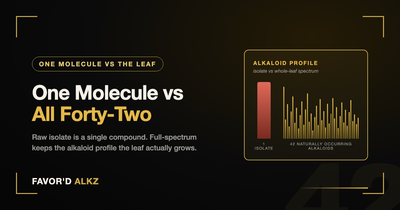
Peer-reviewed work has identified at least 54 alkaloids in Mitragyna speciosa (Flores-Bocanegra et al., 2020). The majors are mitragynine — the dominant alkaloid — alongside paynantheine, speciogynine and speciociliatine, with minors including corynantheidine and mitraphylline (Takayama, 2004). In natural leaf, 7-OH is a trace constituent — typically around 2% or less of the alkaloid fraction, and often far under. A full-spectrum product keeps those proportions the way the leaf made them, rather than isolating one molecule and multiplying it.
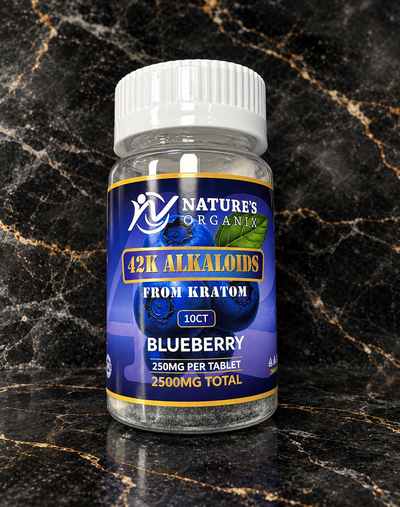
That difference is measurable, so we measure it. Every batch runs through an ISO/IEC 17025-accredited lab on a 9-analyte panel: mitragynine, 7-OH, speciociliatine, paynantheine, speciogynine, corynantheidine, mitraphylline, mitragynine pseudoindoxyl and MGM-15 — the last three routinely below detection limits in our products, exactly as they should be in anything leaf-derived. One concrete example from a current certificate: our Blueberry tablet reports 1.721 mg of naturally occurring 7-OH inside 307.008 mg of total measured alkaloids — about 0.56% of the alkaloid fraction. That is what trace looks like on paper, next to the isolate-era products that were 7-OH practically by definition.
How to vet any "7-OH alternative" — ours included
The habit that survives every regulatory cycle is COA literacy. Four checks:
- Accreditation: the certificate should come from an ISO/IEC 17025-accredited lab, batch-matched to the product in your hand.
- The full panel: a COA that reports only mitragynine can't tell you what else is in the tablet. Look for the scheduled synthetics — pseudoindoxyl, MGM-15 — reported as not detected.
- 7-OH as a trace figure: naturally derived products show 7-OH as a small fraction of total alkaloids, not a headline number.
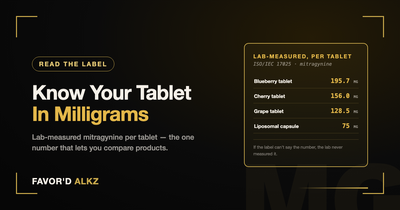
- Mitragynine stated in milligrams: real numbers, per tablet, that you can compare across products.
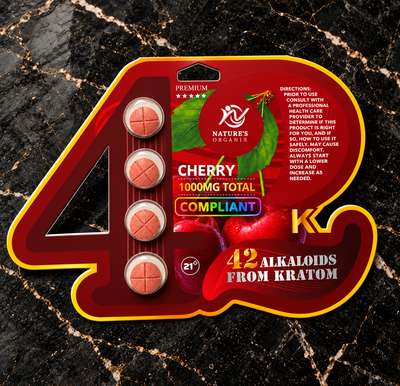
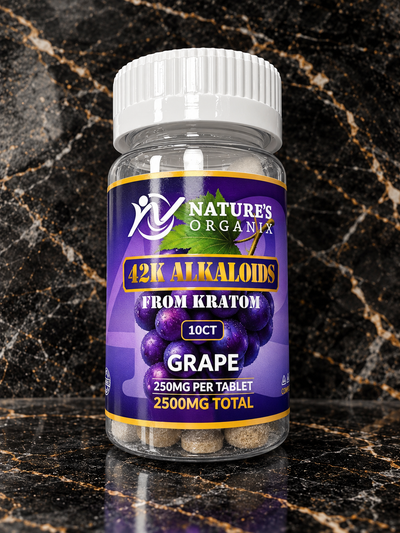
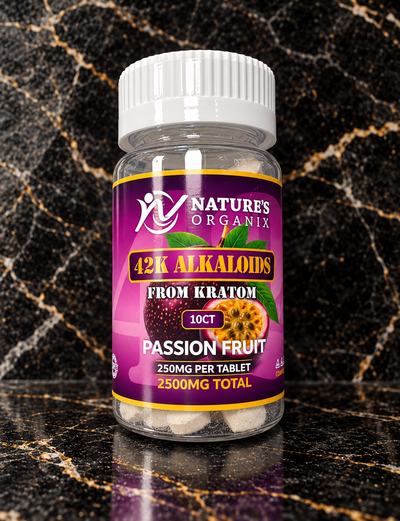
Here is what that looks like in our own lineup. The Nature's Organix full-spectrum tablets post their measured mitragynine per tablet: Grape at 128.5 mg, Cherry at 156.0 mg, and Blueberry at 195.7 mg, with Passion Fruit rounding out the flavor line. For a capsule format, the Nature's Alks 75 mg liposomal capsule carries a published certificate. Current lab work lives on our lab results page, with certificates for other lots available by email. Those figures are label-and-COA facts — we make no claims about what any product does, and serving size per label is the only strength framing we give.
The Full-Spectrum Lineup
Naturally derived, full-spectrum kratom tablets and a 75 mg liposomal capsule — every alkaloid in the leaf's own proportions, including trace naturally occurring 7-OH. ISO/IEC 17025 tested on a 9-analyte panel.
Shop Kratom Tablets · Nature's Alks 75 mg Capsules · Lab Results
The state layer still decides where anything ships
Federal exclusion is half the map. States regulate kratom independently — many through Kratom Consumer Protection Act frameworks with their own caps, age rules and registration requirements, and a handful with outright bans that no federal carve-out touches. This is why we ship full-spectrum products to 27 states only, and why every order is 21+. Before you buy anything in this category, from anyone, check the current law where you live — our state-by-state regulation map is maintained as the record changes. For a deeper read on how the alternative category is defined and policed, see our regulations-desk companion on what actually qualifies as a 7-OH alternative.
Frequently asked questions
Is there a legal 7-OH alternative in October 2026?
The category the July 2026 federal action explicitly leaves outside its thresholds is naturally derived kratom leaf with only trace, naturally occurring 7-OH — full-spectrum tablets and capsules made from leaf, not isolates. DEA-1570 remains proposed scheduling with the final rule pending, and state law applies independently everywhere.
Are the new synthetic "7-OH alternatives" legal?
The synthetics named in DEA-1644 — mitragynine pseudoindoxyl, MGM-15 and MGM-16 — are already covered by an action that is in force with a zero threshold. Newer derivatives marketed as alternatives are not individually named yet, but they follow the same playbook those compounds did, and that playbook has one recorded outcome. Check any product's full COA panel before assuming its status.
What does "full-spectrum" mean on a kratom product?
It means the product keeps the leaf's whole alkaloid profile — peer-reviewed literature identifies at least 54 alkaloids in Mitragyna speciosa, led by mitragynine with paynantheine, speciogynine and speciociliatine — in the proportions the plant produces, with 7-OH present only as a trace constituent rather than isolated or enhanced.
How do I verify a product before buying?
Read the batch-matched Certificate of Analysis from an ISO/IEC 17025-accredited lab. Look for mitragynine stated in milligrams per unit, 7-OH as a small fraction of total alkaloids, and the scheduled synthetics reported as not detected. If a seller can't show you that certificate, treat the product's status as unverified.
These statements have not been evaluated by the Food and Drug Administration. This product is not intended to diagnose, treat, cure, or prevent any disease. For adults 21 and older, where legal.
Research & sources: kratom leaf chemistry and 7-OH facts in this article are drawn from peer-reviewed literature and primary regulatory sources.
- Takayama (2004), Chem. Pharm. Bull. — alkaloid profile of Mitragyna speciosa; 7-OH ≈2% of the alkaloid fraction
- FDA — 7-hydroxymitragynine — the federal view of natural vs concentrated 7-OH
- Favor'd Alkz Regulation Map — current state-by-state shipping status