
The Unintended Consequences of Prohibition
When states ban kratom, legislators often frame it as a public safety measure. The intention is to protect consumers from an unregulated substance. But the data tells a different story — one where prohibition doesn't eliminate demand, it redirects it toward far more dangerous alternatives.
The United States loses over 100,000 people annually to drug overdoses, with synthetic opioids like fentanyl responsible for the vast majority. Meanwhile, kratom — a botanical that has been used for centuries in Southeast Asia — has been caught in the crossfire of well-intentioned but poorly informed drug policy.
What Happens When Access Disappears
When a state bans kratom, existing users don't simply stop seeking relief. Many of these individuals turned to kratom specifically because they were trying to avoid prescription opioids or illicit street drugs. Studies published in the Journal of Psychoactive Drugs and Drug and Alcohol Dependence have documented that a significant percentage of kratom users report using it as a tool to reduce or eliminate opioid use.
When that tool is removed, the options narrow dramatically:
- Return to prescription opioids — which carry their own addiction and overdose risks
- Turn to illicit street drugs — where fentanyl contamination is rampant and unpredictable
- Suffer without any alternative — particularly devastating for chronic pain patients
The Data Behind the Correlation
A 2019 study published in Drug and Alcohol Dependence surveyed over 8,000 kratom users and found that 41% reported using kratom to reduce opioid use. Among those who had previously used opioids, 35% reported they had not used any opioids in the past year since starting kratom.
When researchers at the University of Florida examined overdose death data in states that banned kratom versus states that regulated it, the pattern was consistent: removing a relatively safe alternative did not reduce substance use — it changed the substance people used.
The CDC's own data shows that states with the highest overdose death rates often have the most restrictive policies toward alternative substances. While correlation is not causation, the pattern raises serious questions about whether prohibition is achieving its stated goals.
The Fentanyl Factor
Fentanyl has fundamentally changed the risk calculus for anyone who uses substances outside the regulated pharmaceutical supply chain. A dose measured in micrograms — invisible to the naked eye — can be lethal. And fentanyl has infiltrated virtually every category of street drug, from heroin to counterfeit pills to cocaine.
When someone who was managing their situation with kratom loses access and turns to street alternatives, they're not just facing the risks of the substance they're seeking. They're facing the risk of fentanyl contamination in every transaction.
This is the cruel arithmetic of prohibition: by banning a substance with a relatively low risk profile, policy pushes people toward substances with an extraordinarily high one.
What Regulation Looks Like vs What Prohibition Looks Like
The difference between regulation and prohibition is not semantic — it's life and death.
Regulation means:
- Age restrictions preventing youth access
- Mandatory lab testing ensuring product safety
- Concentration limits preventing dangerously potent products
- Labeling requirements giving consumers accurate information
- A legal supply chain that can be monitored and improved
Prohibition means:
- No quality control whatsoever
- No age verification
- No lab testing or contamination screening
- Criminal penalties that discourage people from seeking help
- An underground market with zero accountability
States that have implemented Kratom Consumer Protection Acts have created frameworks that protect consumers while preserving access. These frameworks require testing, labeling, and age verification — the same tools we use for alcohol, tobacco, and dietary supplements.
A Better Path Forward
The evidence increasingly suggests that the most effective approach to kratom policy is regulation, not prohibition. This means:
- Requiring vendors to publish certificates of analysis for every batch
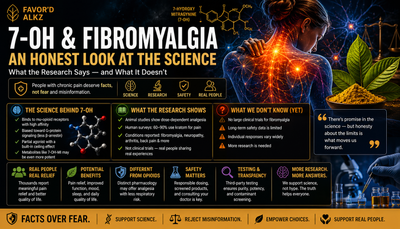
- Setting evidence-based concentration limits for alkaloids like 7-hydroxymitragynine
- Mandating age verification at point of sale
- Funding research into kratom's pharmacology, risks, and potential benefits
- Treating problematic use as a health issue, not a criminal one
At Favor'd Alkz, we believe that transparency and testing are the foundation of responsible access. Every product we sell is independently lab tested and comes with published results — because informed consumers make better decisions than scared ones.
What You Can Do
If you live in a state considering kratom legislation, your voice matters. Visit our Regulation Terminal to find your representatives, check your state's current laws, and access tools to advocate for evidence-based policy.
Prohibition has never eliminated demand. It has only ever made supply more dangerous.
Disclaimer: This article is for informational purposes only and does not constitute medical or legal advice. Kratom products sold by Favor'd Alkz are not intended to diagnose, treat, cure, or prevent any disease. These statements have not been evaluated by the Food and Drug Administration.
Last updated: April 2026